
Essential Tech Blogs Every Software Engineer Should Follow
Tech Company Blogs Netflix Tech Blog Google Developers Blog Amazon Web Services (AWS) Blog Uber Engineering Blog Stripe Engineering Blog Airbnb Engineering Blog Meta Engineering Blog...
Tech Company Blogs Netflix Tech Blog Google Developers Blog Amazon Web Services (AWS) Blog Uber Engineering Blog Stripe Engineering Blog Airbnb Engineering Blog Meta Engineering Blog...

TL;DR AI assists every stage of the development lifecycle — but engineering oversight is non-negotiable at each one. The rule: AI generates, engineer decides. Never approve code you don’t und...
TL;DR A structured prompt is a function signature: define role, task, constraints, and expected output explicitly. This post doesn’t invent a new template — it takes the REASONS Canvas and th...
TL;DR Vibe Engineering is the disciplined practice of directing, reviewing, and owning AI-generated code — not just accepting whatever the model outputs. AI tools produce code that compiles b...
TL;DR Modern systems combine batch pipelines, streaming data, and ML inference — each with distinct architectural needs, in any language or stack. Retrieval-Augmented Generation (RAG) is the ...
TL;DR An AI agent can generate a working file in seconds, but it has no memory of your system’s boundaries from one prompt to the next. Architecture is the vocabulary you use to hold that line ...
TL;DR Spec-Driven Development (SDD) is a four-phase lifecycle — Specify → Plan → Tasks → Implement — that separates deciding what and why from deciding how, with a human review gate between eve...
TL;DR Using your test suite as the prompt context transforms AI from an unpredictable oracle into a precise implementation tool — the tests define the contract, the AI fulfils it. The Zero-Co...
TL;DR TDD (Test-Driven Development) means writing a failing test before writing any implementation code — this forces you to think about correctness first. The engine is Red-Green-Refactor: wri...
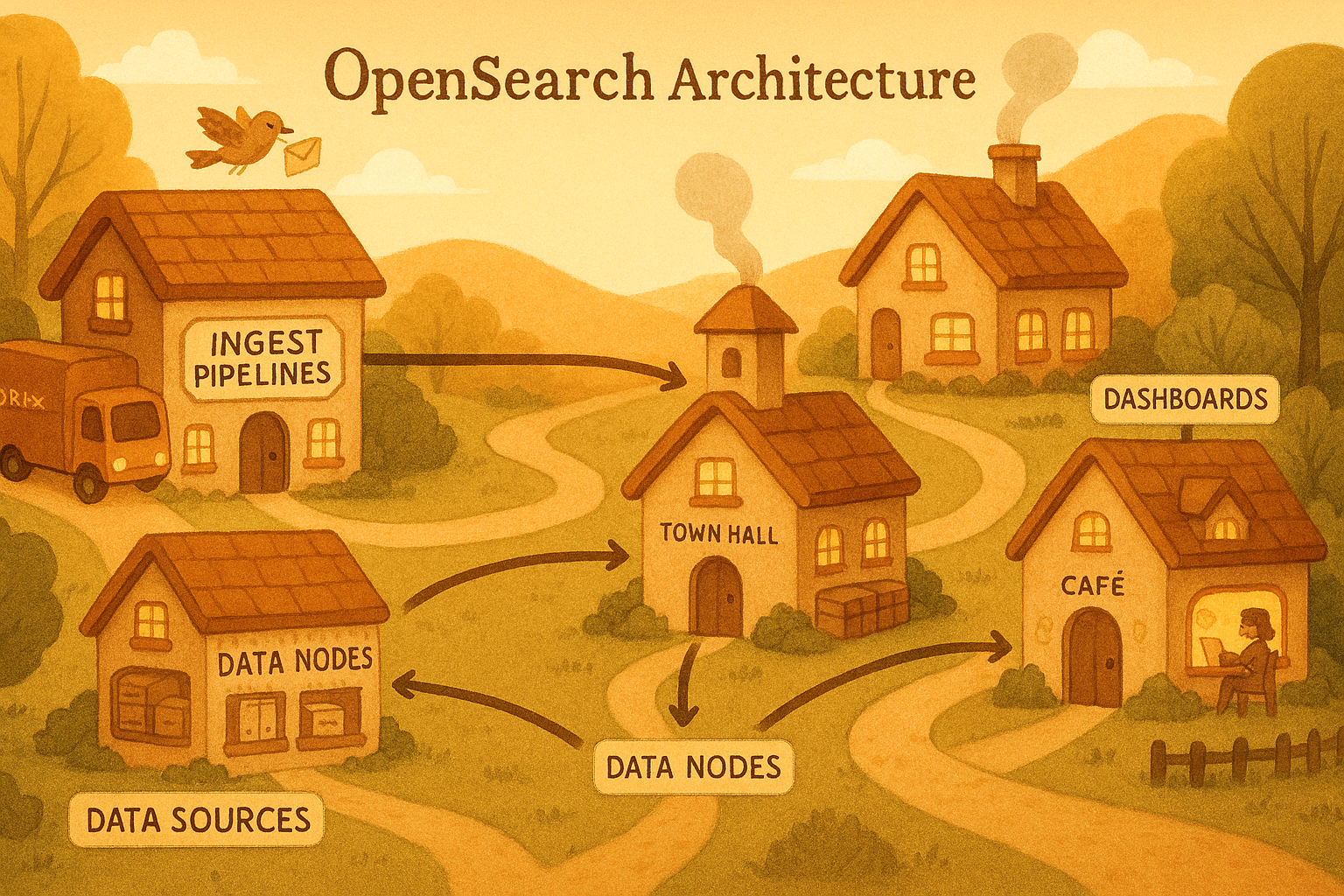
In the previous three articles, we covered the architecture of OpenSearch and Fluent Bit, how to set up a high-throughput logging pipeline, and how to optimize for ingestion performance. In this fi...